AI-Powered Digital Biomarkers for Predictive Vital Sign Changes
Experience the Future of Healthcare Intelligence in Singapore
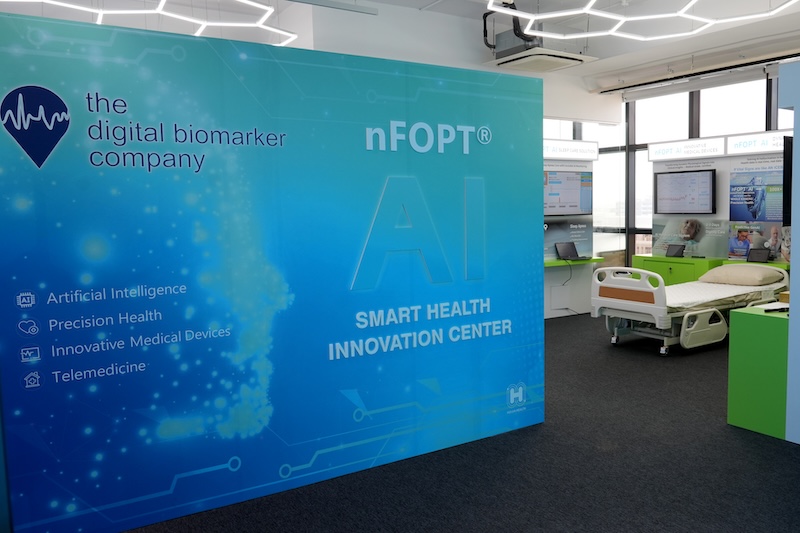
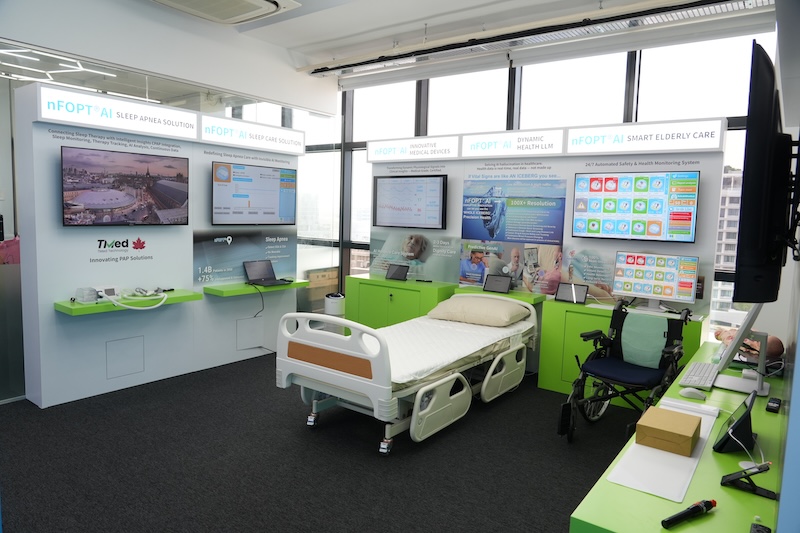
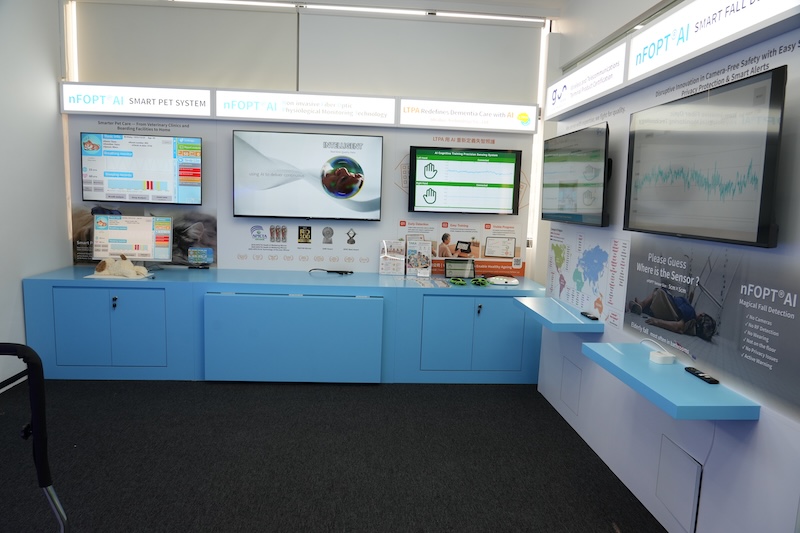
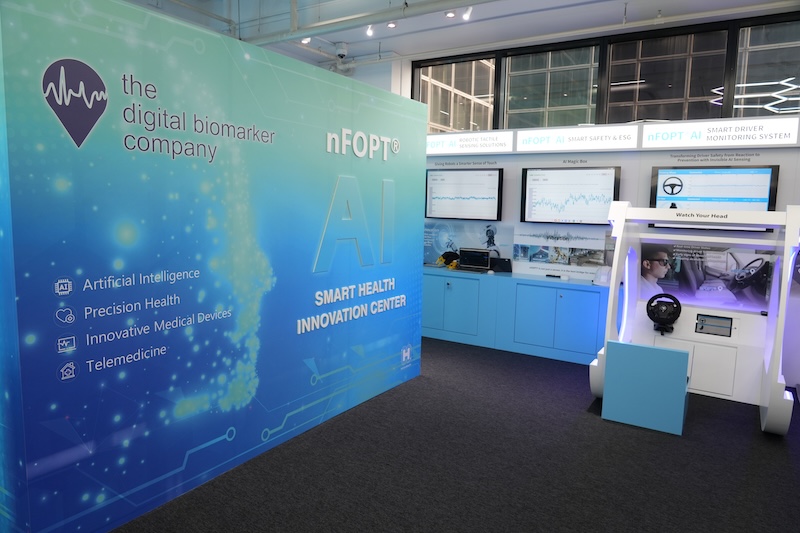
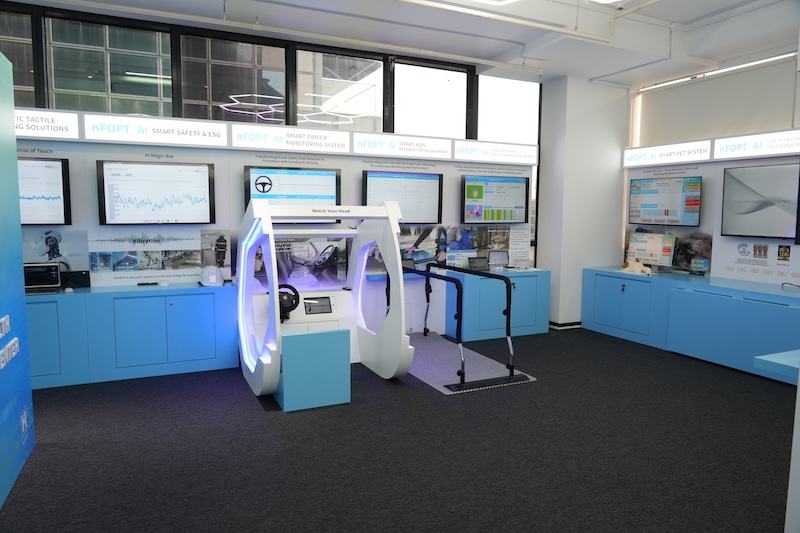
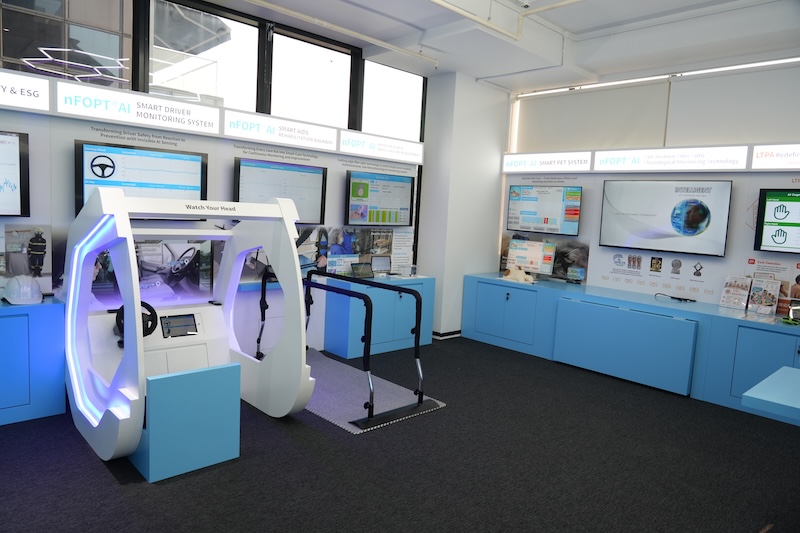
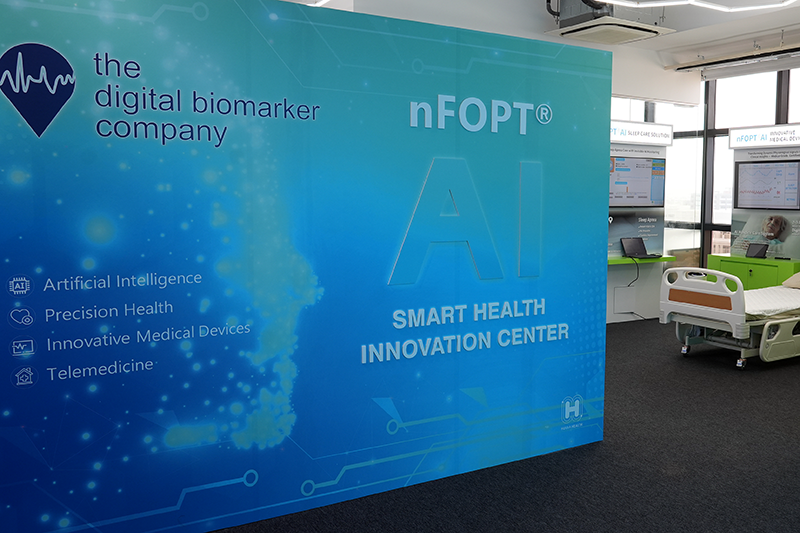
Visit The Digital Biomarker Company (TDBC) AI Healthcare Innovation Center on Howard Road, Singapore, and experience nFOPT® technology in action.
See how our contactless fibre-optic sensing technology captures physiological signals without wearables, cameras or electrodes, and transforms them into meaningful digital biomarkers and physiological intelligence.
Explore applications across sleep, elderly care and remote health monitoring, and discover how nFOPT® could support your organisation.
Contact us to arrange a visit.
Others tell you how you slept last night. TDBC tells you what may happen next.
Powered by the proprietary nFOPT® sensor and AI analytics developed using millions of hours of biomarker data, TDBC identifies meaningful physiological changes to provide earlier awareness of potential health issues.
From sleep and elderly care to remote monitoring and chronic condition management, our contactless technology helps healthcare professionals and carers recognise change earlier and act before problems escalate.
Simple to deploy and easy to use, nFOPT® integrates into care environments without wearables, cameras or electrodes, supporting better care while reducing the burden on healthcare resources.

Meet nFOPT®
What if the technology quietly watching over you could speak? In this short film, nFOPT® tells its own story, revealing how continuous, contactless monitoring can help us understand the body’s subtle signals and recognise when something may be changing.
Watch the video below and meet the intelligence behind nFOPT®.
About TDBC: Advancing Predictive Condition Change

The Digital Biomarker Company (TDBC) is a Singapore-based health technology company pioneering digital biomarkers and physiological intelligence. Our goal is to move healthcare beyond retrospective monitoring towards earlier awareness of meaningful physiological change.
Combining the contactless nFOPT® fibre-optic sensor, millions of hours of biomarker data and advanced AI health analytics, TDBC supports applications across sleep, elderly care, remote monitoring and chronic condition management.
Building on more than 15 years of technology development and real-world experience from our strategic technology partner, Huijia Health Life Technology (滙嘉健康), TDBC is bringing nFOPT® and predictive health intelligence to healthcare providers worldwide, helping advance the future of health for all.

The TDBC Solution: nFOPT® Sensor · Biomarker Database · AI Analytic Algorithm
At the heart of TDBC is a three-pillar platform that captures, analyses and transforms raw physiological signals into meaningful digital biomarkers and earlier awareness of potential condition change. This can help healthcare professionals and carers act sooner, improve patient outcomes and reduce the cost and resource burden of care across the home, community, residential care and hospital environments.
nFOPT® stands for non-invasive Fiber Optic Physiological monitoring Technology.
nFOPT® Sensor
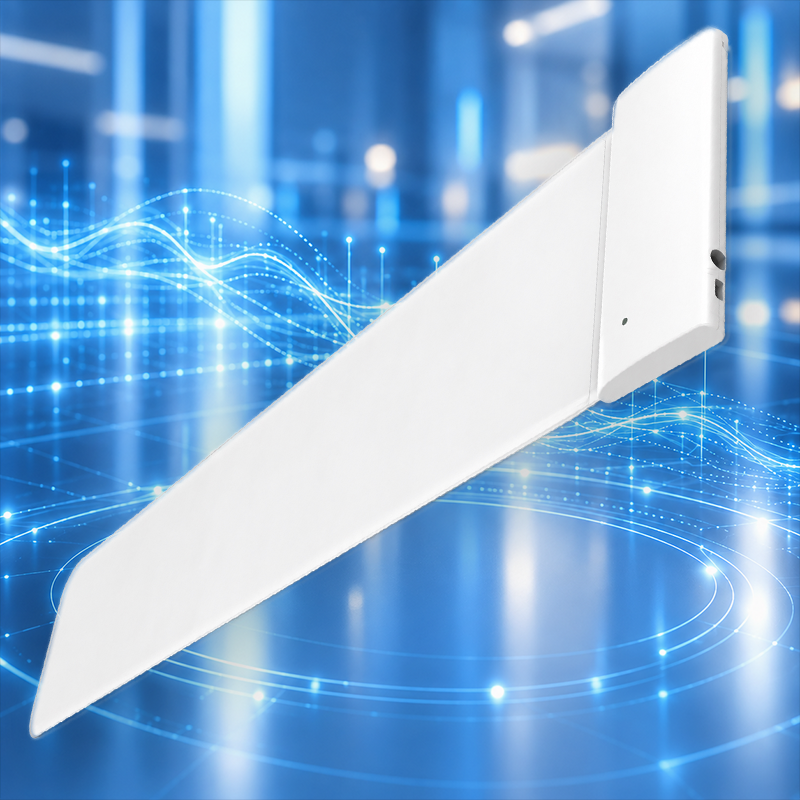
The contactless, ultrasensitive nFOPT® fibre-optic sensor is placed beneath the mattress, with no physical contact with the patient. It captures micro-movements, respiration and subtle physiological signals without wearables, electrodes, wires or electromagnetic interference.
Biomarker Database

Built from millions of hours of validated sleep and physiological data, TDBC’s biomarker database provides the foundation for identifying patterns, changes and relationships in physiological signals. This depth of longitudinal data enables the development and continuous refinement of digital biomarkers and predictive analytics.
AI Analytic Algorithm

TDBC’s proprietary AI analytics continuously interpret physiological data, recognising patterns and identifying meaningful changes over time. By detecting emerging changes earlier, the system can provide actionable alerts that help clinicians and carers intervene before problems escalate, potentially creating better outcomes for the patient.
nFOPT® in Real-World Care
Already deployed in more than 6,000 installations across Taiwan in elderly care, hospitals and research centres, nFOPT® provides continuous, contactless physiological monitoring in real-world care environments. The technology is used within a Taiwan FDA Class II medical device, connecting unobtrusive monitoring beneath the mattress with continuous analysis and clear, actionable information for the care team.
Continuous Contactless Monitoring
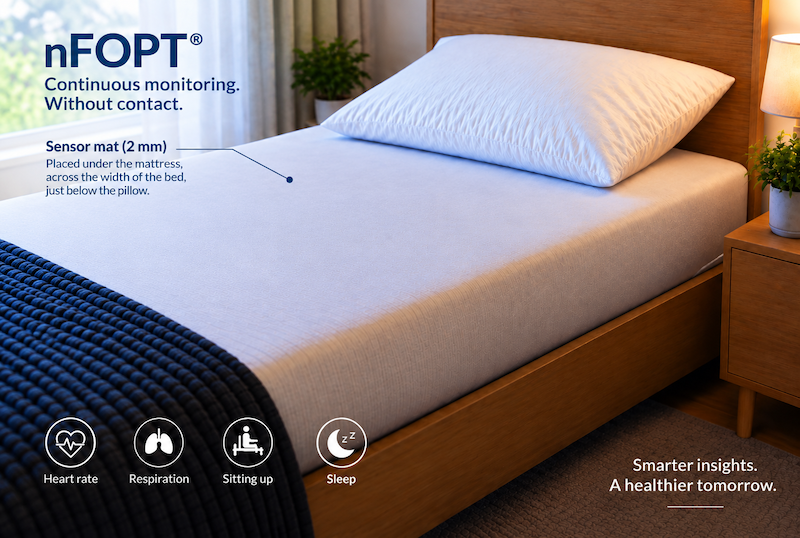
Placed beneath the mattress, nFOPT® continuously captures subtle physiological signals without wearables, electrodes, cameras or physical contact with the patient.
Continuous Physiological Signal Processing & Analysis
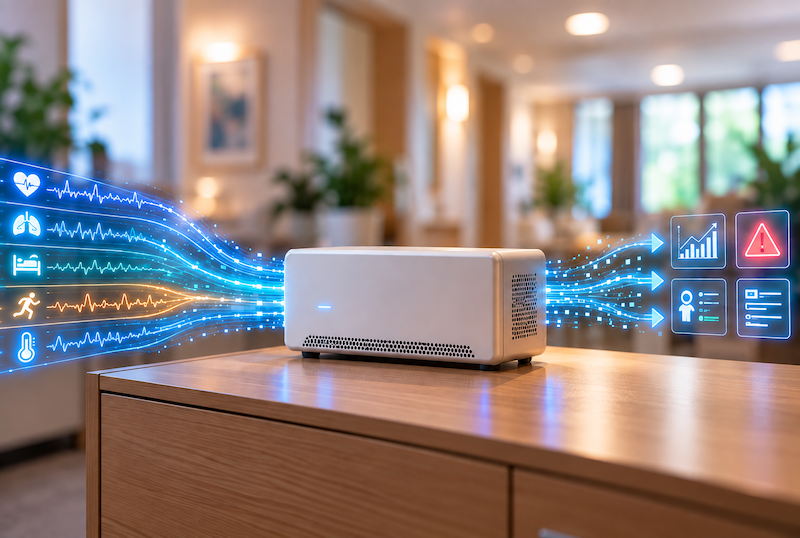
These signals are continuously processed and analysed, transforming micro-movements into physiological information and identifying meaningful patterns and changes over time.
Actionable Information for Care Teams
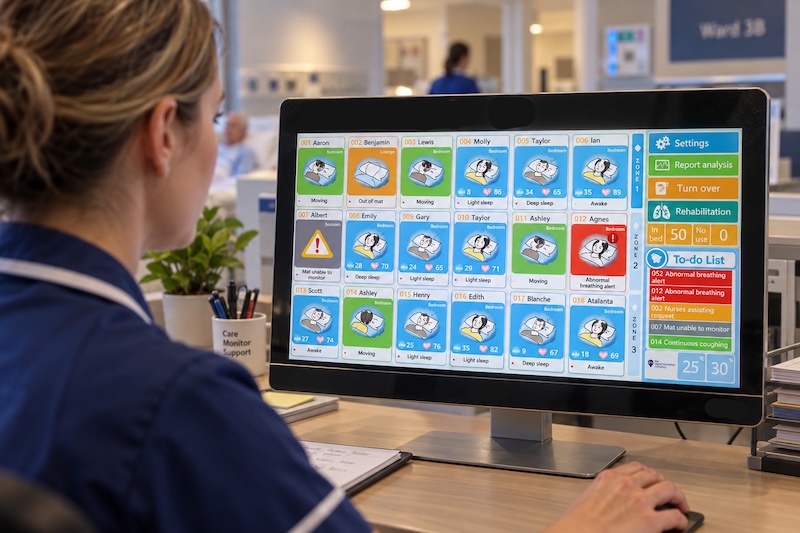
Meaningful information and alerts are presented clearly to the care team, helping carers recognise change earlier and take appropriate action when needed.
Designed for Privacy. Built for Secure Intelligence
Health data requires the highest levels of protection. TDBC is designed around secure data handling, controlled access and privacy-conscious processing throughout the monitoring and analysis process.
Federated learning can enable AI models to learn from data across different care environments without requiring sensitive patient data to be brought together in a single central database. Instead, learning can take place closer to where the data is held, with model improvements shared rather than the underlying patient data.
The intelligence can travel. The patient data doesn’t have to.
Most Health Monitoring Sees Only The Tip of the Iceberg. nFOPT® Lets You See What's Underneath
Traditional health monitoring often relies on individual measurements taken at a particular moment: heart rate, respiratory rate, blood pressure, temperature or oxygen saturation. These measurements are important, but they provide only a snapshot of a person’s condition.
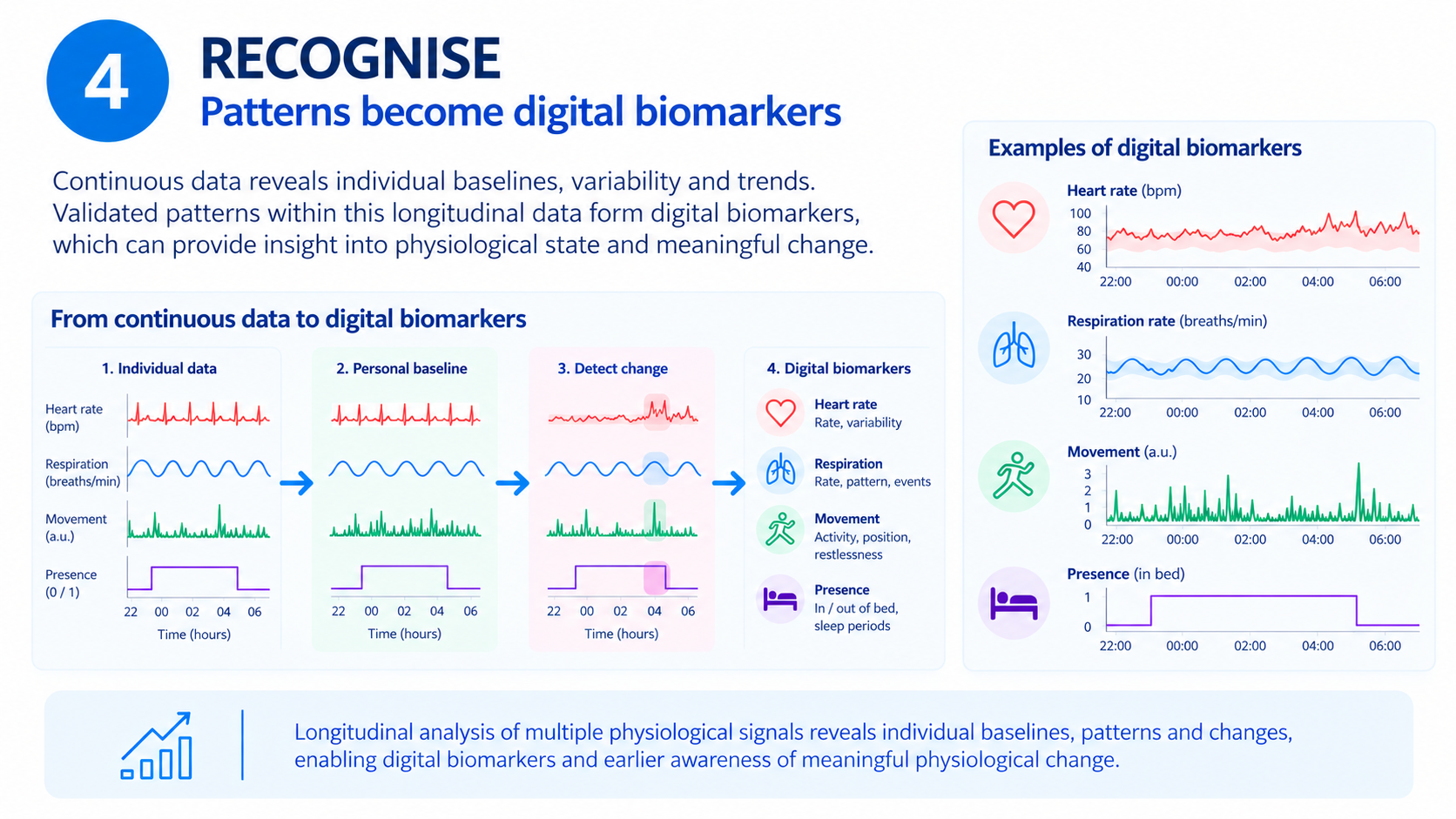
Continuous physiological monitoring can reveal what lies beneath: individual baselines, trends, variability, relationships between signals and subtle changes developing over time. It is within this longitudinal data that digital biomarkers can emerge, providing earlier awareness of meaningful physiological change.
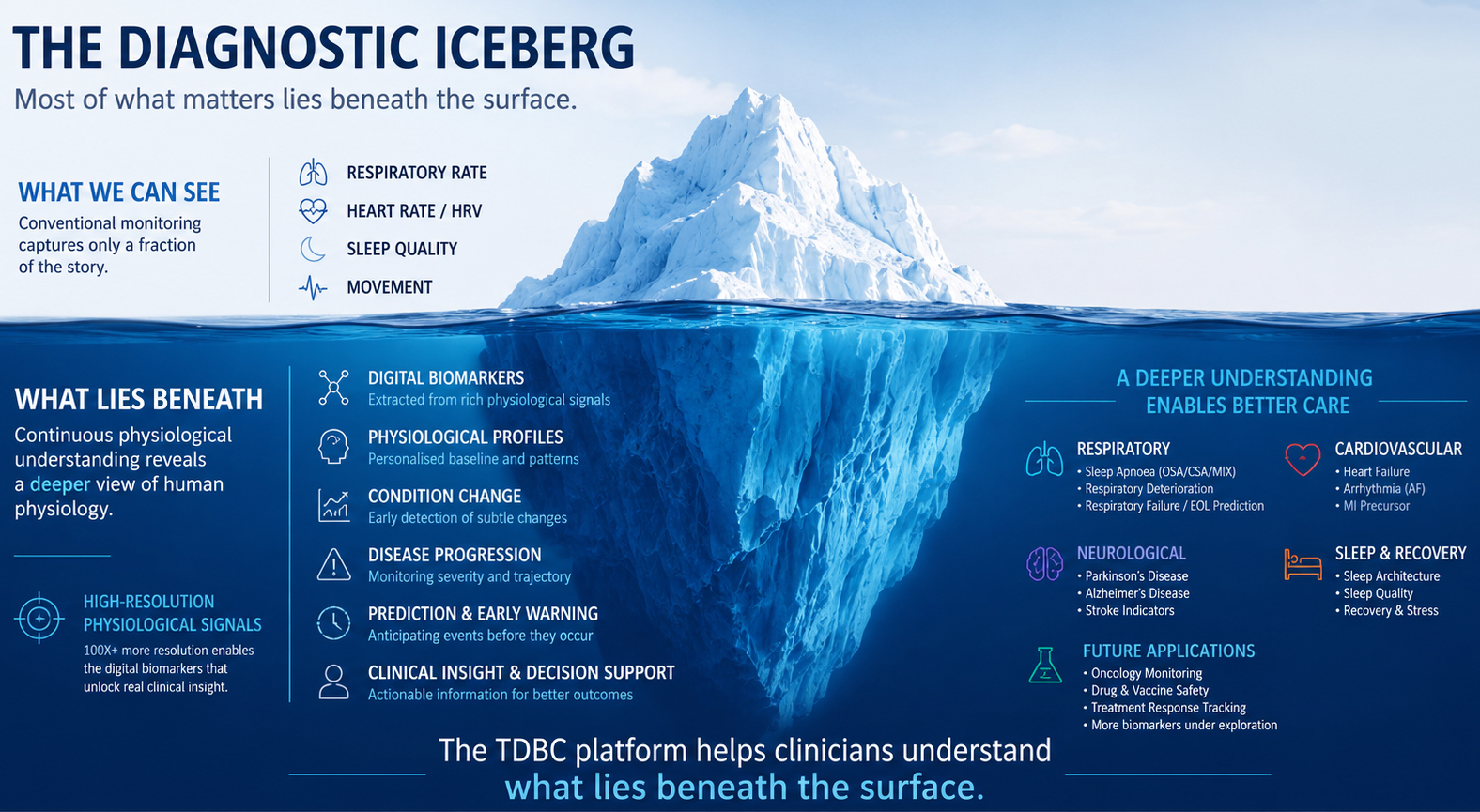
An Expanding Digital Biomarker Platform
nFOPT® already supports established digital biomarkers for heart rate, respiration and sleep, including the identification of obstructive and central sleep apnea (OSA and CSA). Peer-reviewed research has demonstrated agreement with polysomnography (PSG), the clinical gold standard for sleep assessment.
But this is only the beginning. Ongoing research by Huijia (滙嘉健康) in conjunction with hospitals and research centers in Taiwan and elsewhere continues to explore and validate new digital biomarkers derived from continuous physiological data, investigating how subtle changes and relationships within these signals may provide earlier insight into changes in health and condition. As the evidence base grows, so too does the potential of the nFOPT® platform.
More data. More biomarkers. A deeper understanding of physiological change.
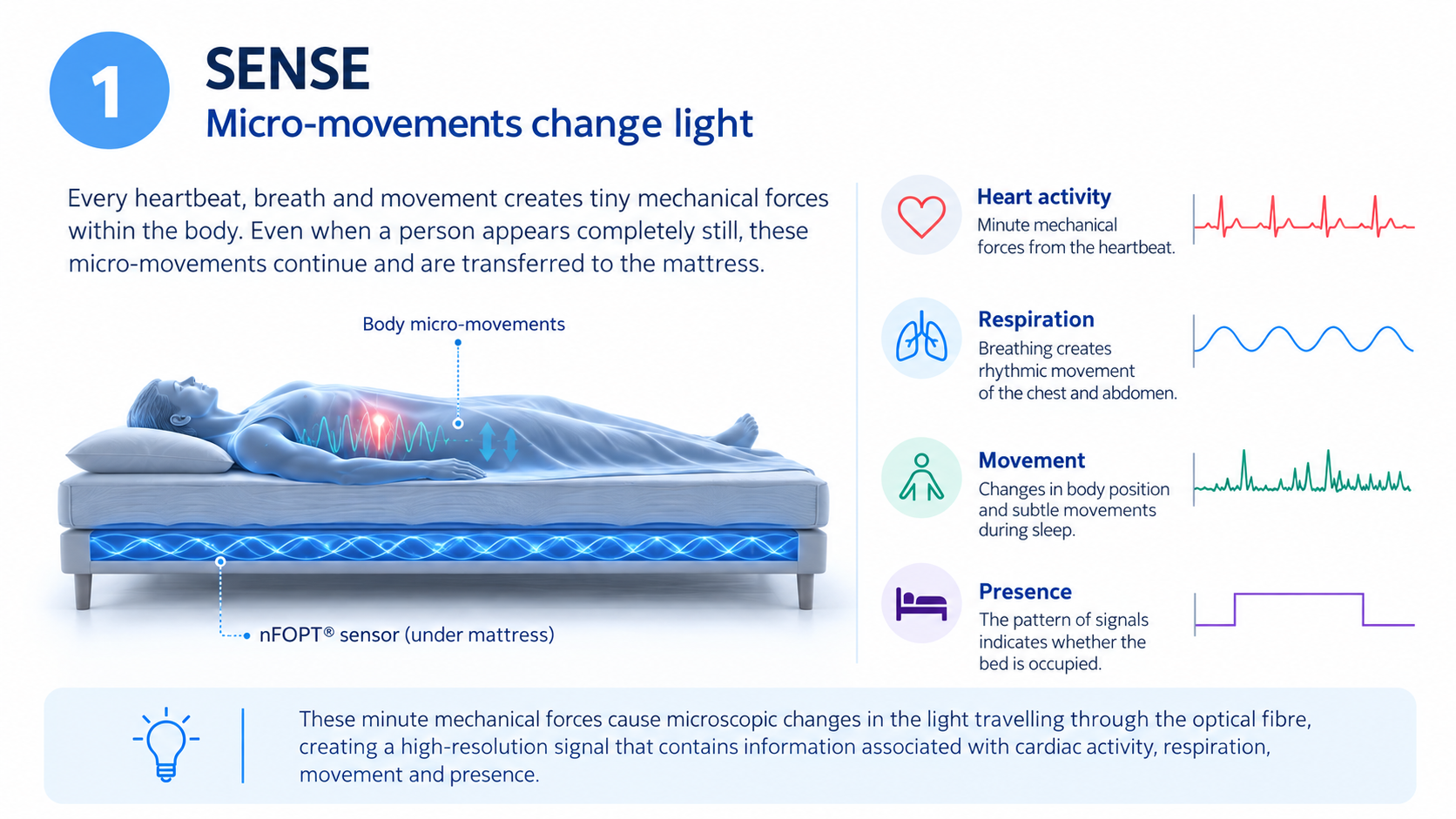
How nFOPT® Turns Movement into Physiological Intelligence
Every heartbeat, breath and movement creates tiny mechanical forces within the body. Even when a person appears completely still, these micro-movements continue.
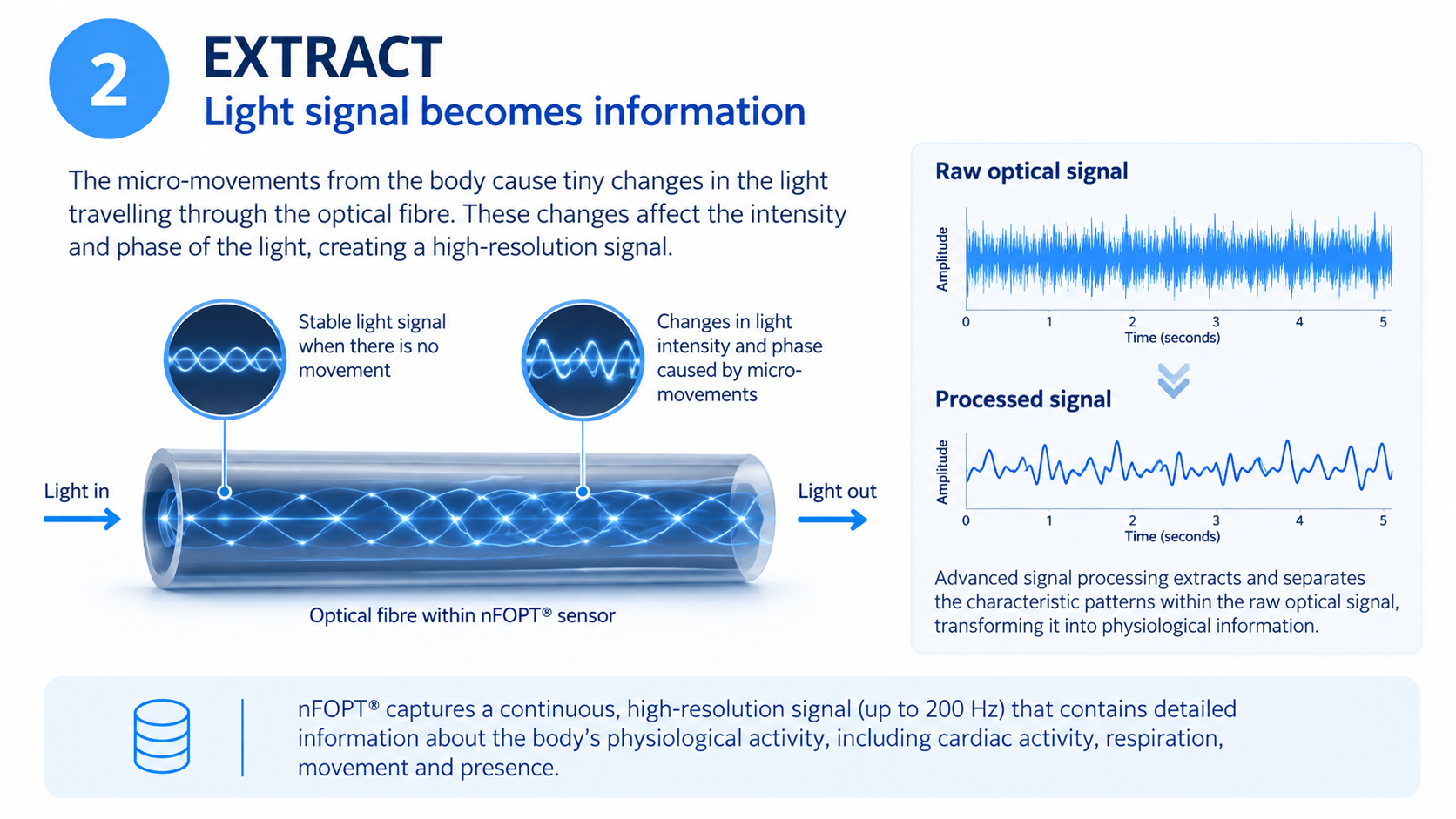
Placed beneath the mattress, nFOPT® detects these minute movements through microscopic changes in light travelling through optical fibre. The resulting high-resolution signal contains information associated with cardiac activity, respiration, movement and presence.
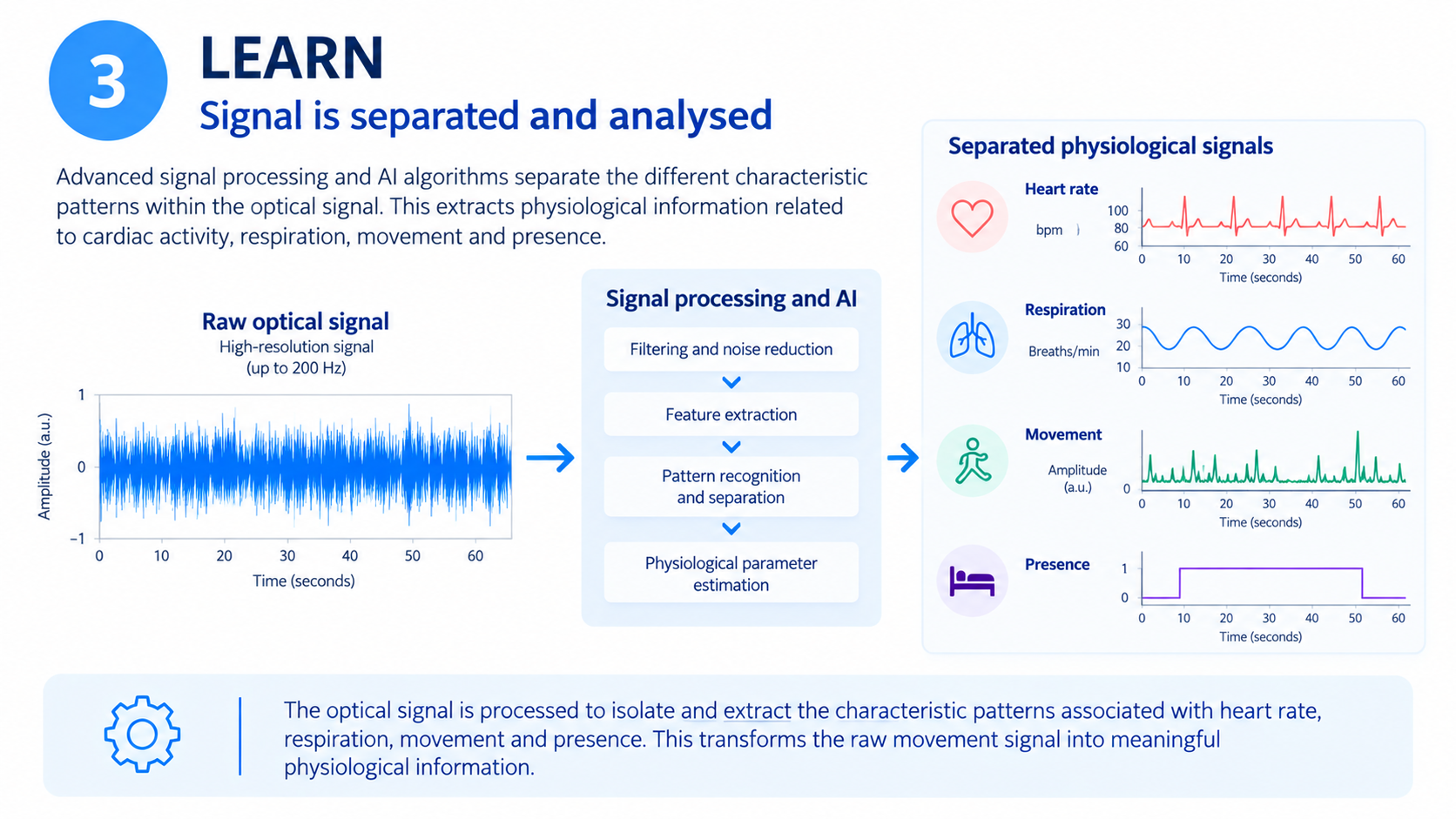
TDBC’s algorithms process and separate these characteristics, transforming raw movement into physiological information that can be monitored continuously over time. Repeated monitoring reveals individual baselines, patterns and changes, creating the foundation for digital biomarkers and earlier awareness of physiological change.
Click on an image to explore in more detail.
Why TDBC? From Monitoring to Earlier Awareness of Change
Most monitoring systems tell you what is happening now, or what has already happened. TDBC’s approach is different. Continuous physiological monitoring builds an understanding of the individual over time, allowing meaningful changes from established patterns to be recognised earlier.
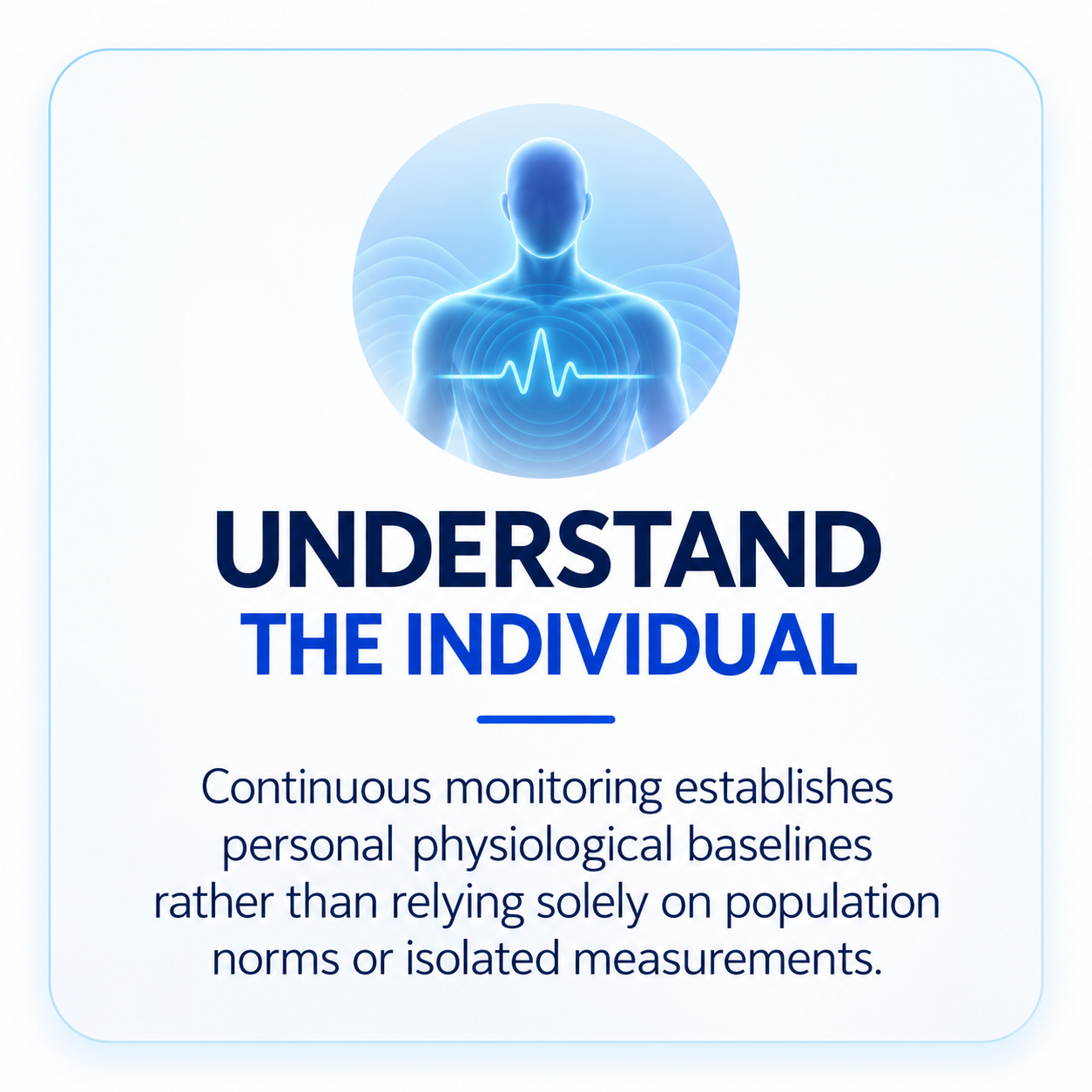
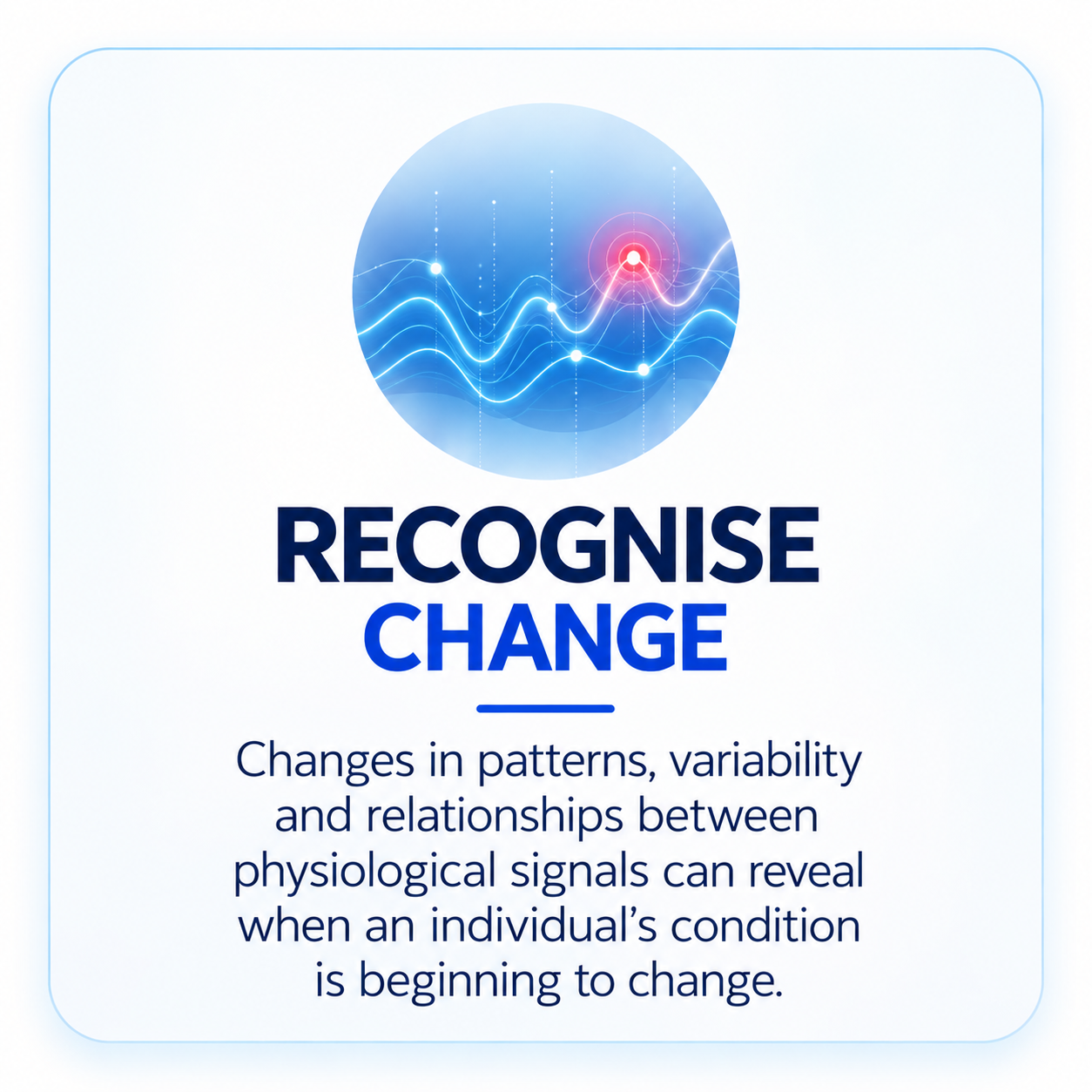
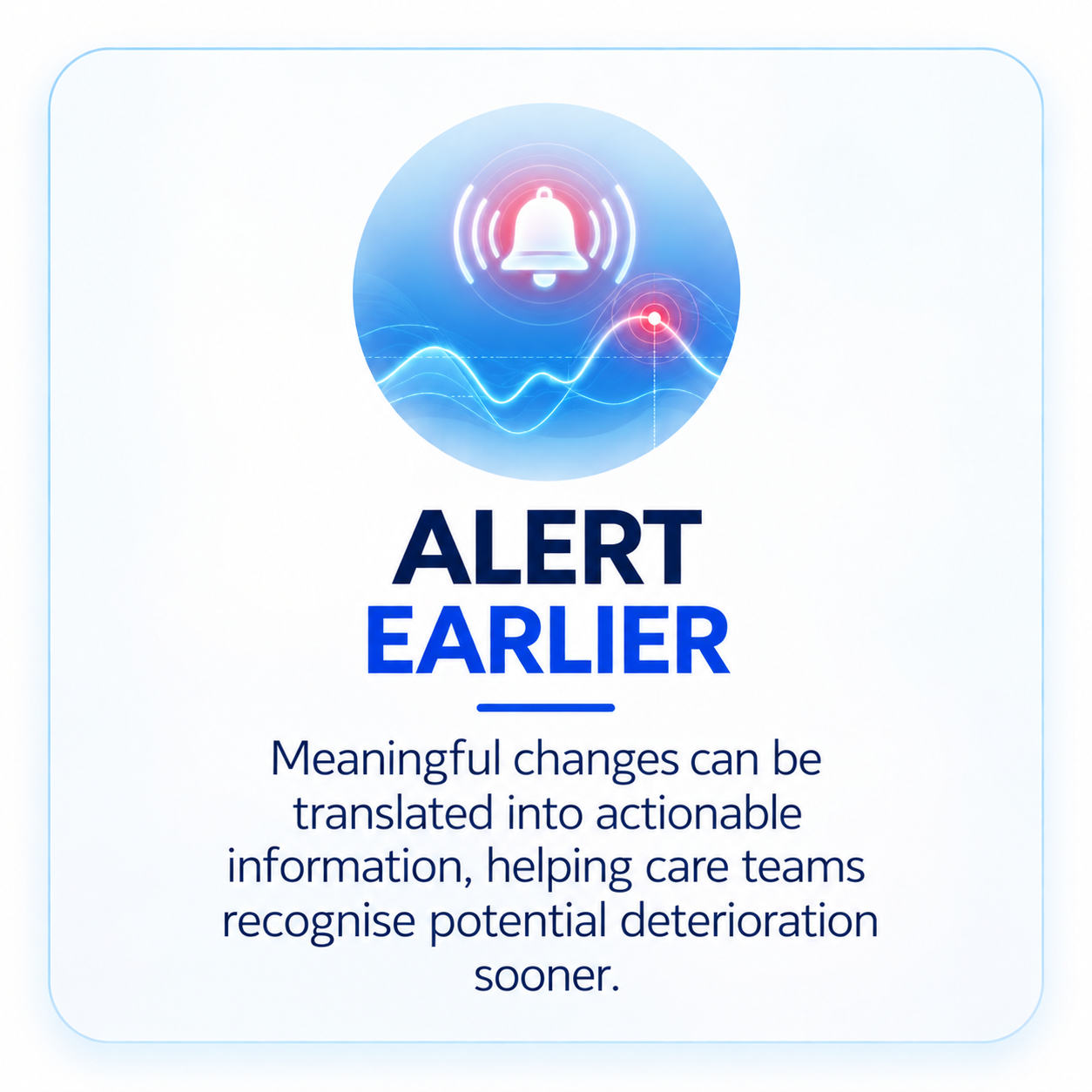
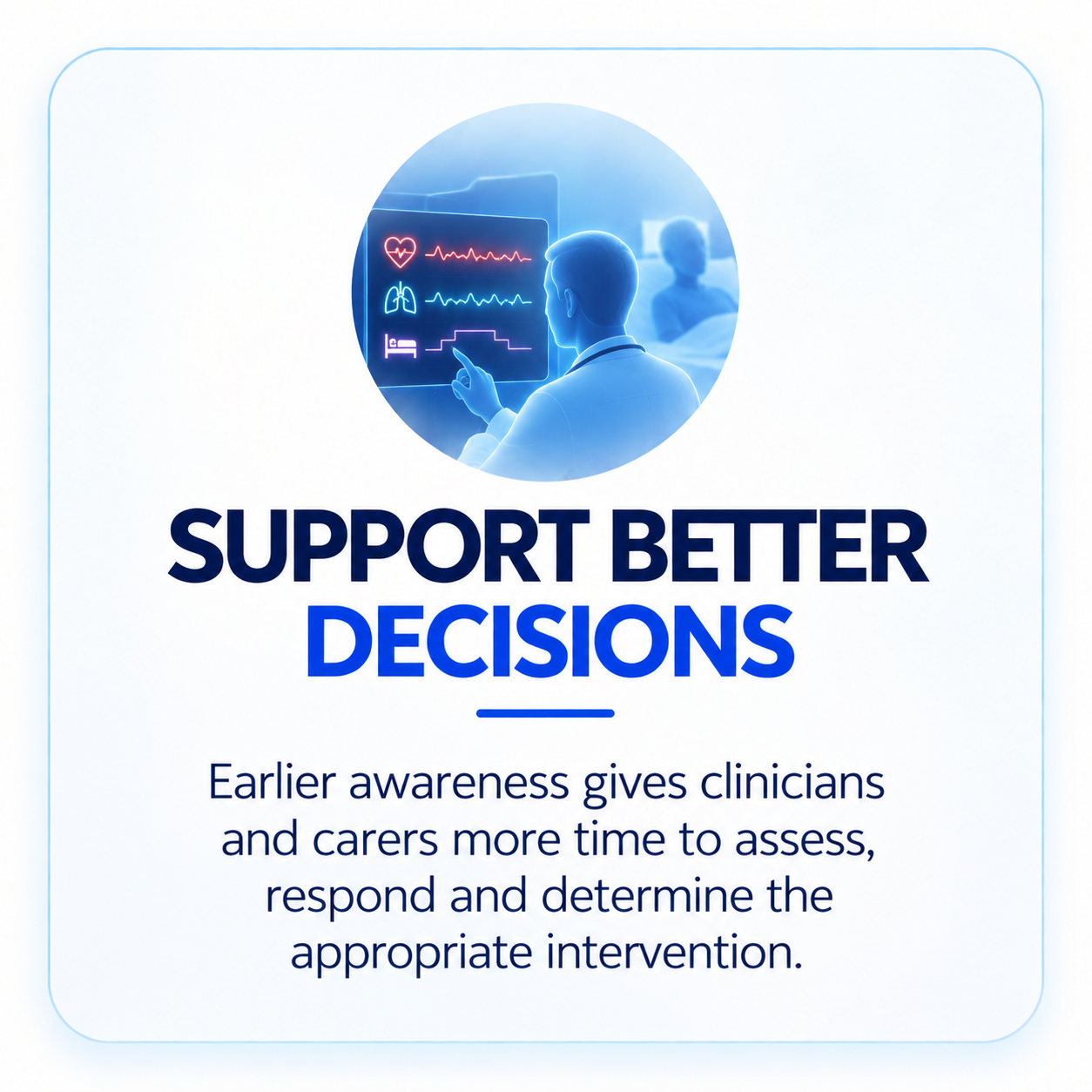
Beyond tracking. Towards predictive physiological intelligence.
Health Applications: From Sleep Apnea to Continuous Care
TDBC’s technology can be applied wherever continuous physiological information can provide a deeper understanding of health and condition change. From sleep apnea and elderly care to hospital and remote monitoring, nFOPT® provides contactless, continuous physiological data that can help identify patterns, establish individual baselines and provide earlier awareness of meaningful change.
The same approach also has potential beyond healthcare, wherever understanding changes in human physiology could improve safety, wellbeing and performance.
Sleep Apnea & Sleep Health
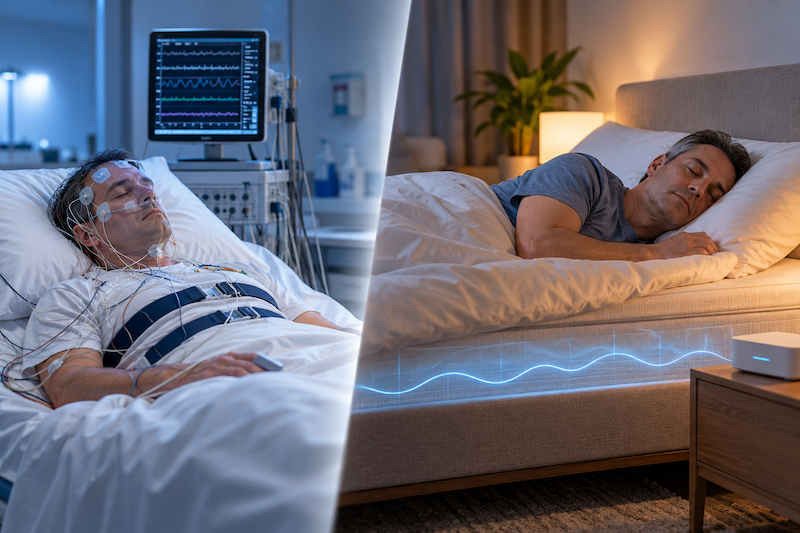
Sleep assessment traditionally relies on polysomnography (PSG), the clinical gold standard for diagnosing sleep disorders. However, specialist facilities, equipment and clinical resources can make large-scale or repeated assessment difficult.
nFOPT® provides contactless, continuous monitoring while a person sleeps naturally, capturing cardiac activity, respiration, movement and sleep-related physiological patterns without electrodes or wearables. Peer-reviewed research has demonstrated agreement with PSG for the identification of obstructive and central sleep apnea (OSA and CSA).
This creates the potential for nFOPT® to support sleep apnea assessment in the home, helping identify people who may require further clinical investigation, prioritise higher-risk cases and reduce unnecessary pressure on specialist sleep centres. Continuous monitoring can then extend beyond a single assessment, providing a longitudinal picture of sleep and physiological change over time.
From a single night’s measurement to continuous understanding of sleep over time.
Elderly & Residential Care
Ageing populations are increasing demand for elderly and residential care at the same time as care providers face growing shortages of skilled staff. The challenge is increasingly clear: more people need monitoring and support, while fewer carers are available to provide it.
nFOPT® can help bridge this gap by continuously and unobtrusively monitoring residents while they are in bed, without wearables, cameras or additional demands on care staff. Changes in respiration, heart activity, movement, sleep and bed occupancy can be monitored automatically, allowing carers to focus their attention where it is needed most.
Rather than replacing human care, the technology helps make limited care resources more effective, providing earlier awareness of meaningful physiological change and supporting more timely intervention.
This is not simply a future concept. nFOPT® technology is already deployed across more than 6,000 installations in Taiwan, including elderly care environments, providing extensive real-world experience in continuous, contactless monitoring.

Continuous monitoring means care teams do not need to be physically present to know when something may be changing. By helping identify residents who may need attention, nFOPT® can support more effective use of limited care resources, enabling carers to focus their time where human care is needed most.
Technology does the monitoring. People provide the care.
Hospital Monitoring
Hospital care depends on timely information, yet many patients are still assessed through periodic observations that provide only snapshots of their condition. At the same time, clinical teams face increasing workloads, making continuous manual monitoring impractical outside higher-acuity environments.
nFOPT® can provide continuous, contactless physiological monitoring while the patient is in bed, without adding electrodes, wearables or additional routine measurement tasks for clinical staff. By establishing individual baselines and identifying meaningful changes over time, it has the potential to provide earlier awareness of deterioration and help care teams focus attention where it is needed most.
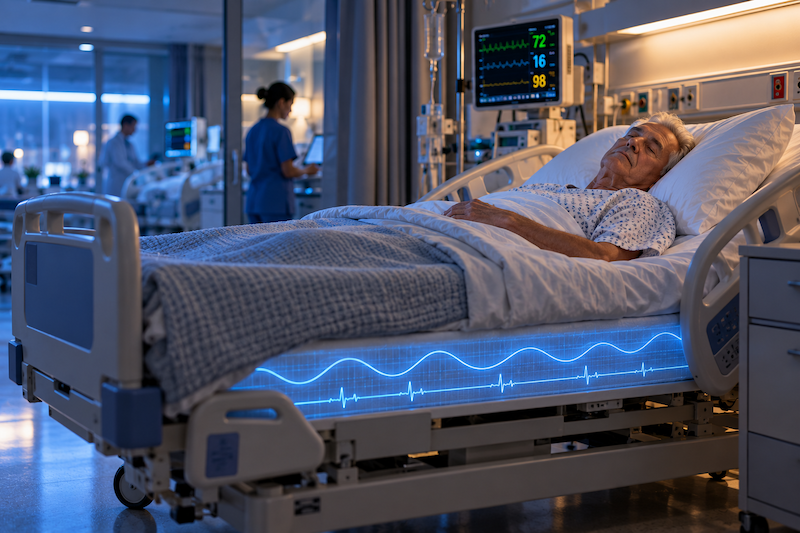
By extending continuous physiological monitoring beyond traditional high-acuity settings, nFOPT® has the potential to give clinical teams greater visibility across more patients without increasing the burden of routine observations. Earlier recognition of meaningful change can help clinicians prioritise attention, investigate deterioration sooner and make better use of limited clinical resources.
More continuous visibility. More time to respond.
Remote & Home Care
Healthcare systems face growing pressure on hospital capacity, making it increasingly important to provide appropriate care outside the hospital. Remote monitoring can help people remain safely at home for longer before hospital admission is necessary, while also supporting earlier discharge by extending physiological monitoring into the home.
nFOPT® can support this transition by providing continuous, contactless monitoring while a person sleeps or rests, without requiring them to wear, charge or operate a device. Changes in physiological patterns can be monitored remotely, giving care teams greater visibility between visits and earlier awareness when a person’s condition may be changing.
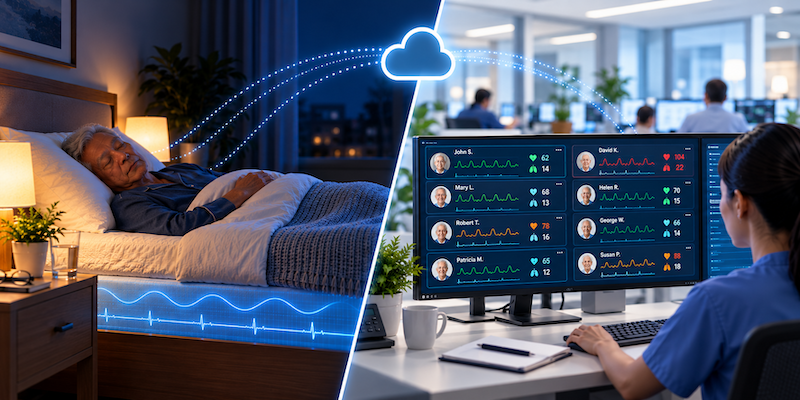
By extending physiological monitoring beyond the hospital, nFOPT® can help create a more connected continuum of care. Patients can potentially remain at home for longer, return home sooner after hospitalisation, and continue to be monitored between clinical visits, helping healthcare providers use limited hospital capacity and clinical resources more effectively.
Extending care beyond the hospital. Without bringing the hospital home.
Safety-Critical Professions
In safety-critical professions, changes in fatigue, sleep quality and physiological condition can affect alertness, judgement and performance. For pilots, professional drivers, emergency responders and others working in demanding environments, recognising these changes before they become a safety risk could have significant value.
The same physiological intelligence developed for healthcare has potential applications in occupational health and safety. Continuous, contactless monitoring during sleep and rest could help establish an individual’s normal physiological patterns and identify meaningful changes that may indicate increasing fatigue, inadequate recovery or other changes requiring attention.

By building a longitudinal understanding of an individual’s physiology during sleep and recovery, nFOPT® could provide a more objective picture of readiness for demanding work. Changes from an established personal baseline may help identify when fatigue, inadequate recovery or other physiological changes warrant attention, supporting better-informed decisions before an individual begins a safety-critical task.
Understanding readiness before performance becomes risk.
The TDBC Leadership Team
CEO

Guy Beckerlegge
More than 20 years in the medical, health, and wellness sectors across the US, EU, and Asia. Founder of several medical device companies and multiple health-related businesses. Expertise in business development, sales, regulatory and certification, medical device distribution, and market access.
CTO

Desmond Ng
A technology entrepreneur and engineering leader with 30+ years of experience in deep-tech innovation, wireless communications, and medical monitoring technologies. Has built and commercialized multiple technology businesses across Asia, the United States, and Europe, with patents granted in the United States, China, and Taiwan.
CPO

Eric Djie
30 years in startup, design, and product development across various categories. Experience in SaaS, IoT, and awarded product design. Co-founder and CEO of the company that developed NASA’s tablet PC for astronauts (2009–2014). Holds a degree in medicine and several functional and aesthetic patents.
COO

David Ring
30+ years of experience in technology, manufacturing, and international business operations across Asia, Europe, and the United States. Background in electronics manufacturing, cross-border project management, product commercialisation, and operational leadership, focused on innovation and growth.
Founder & Board Advisor

Michael Taube
25+ years of experience in medical technology and devices, including leadership roles such as Marketing Manager at Philips, Business Unit Director at GE HealthCare, VP & GM at ResMed, CMO at Ivoclar, COO at Otivio and GM at OrthoApnea.
Huijia Health Life Technology (滙嘉健康) Team
Huijia Health (滙嘉健康) is TDBC’s strategic technology partner, bringing more than 15 years of nFOPT® development, clinical research and real-world deployment experience to our global platform.
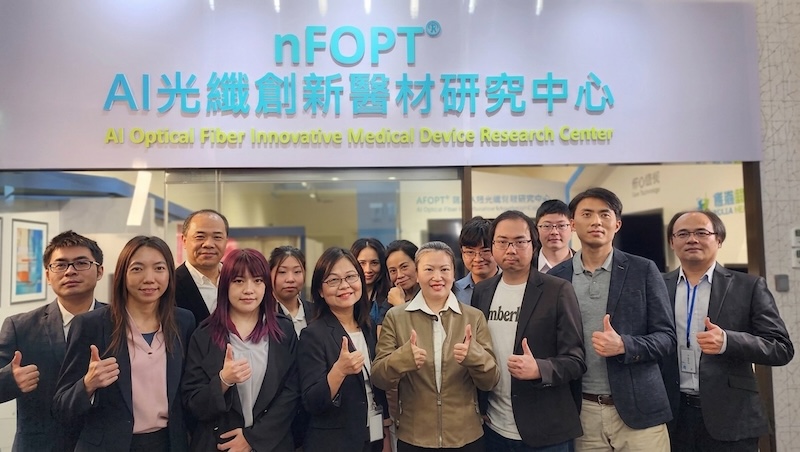
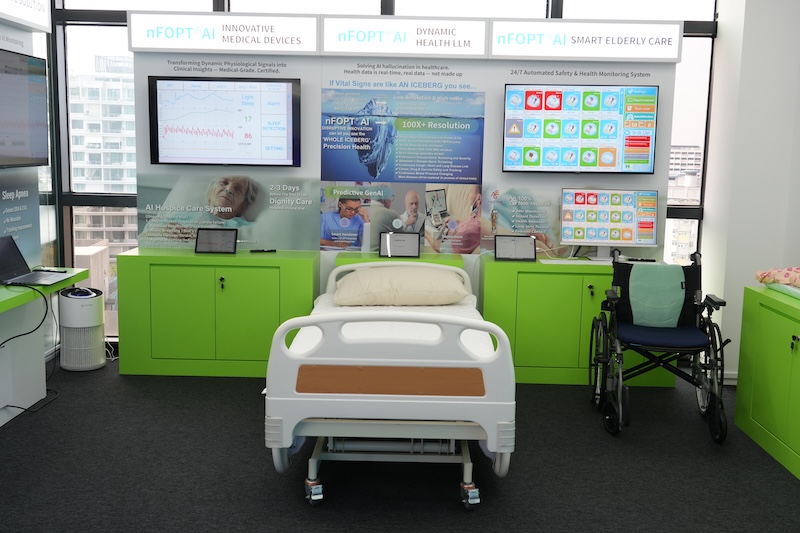
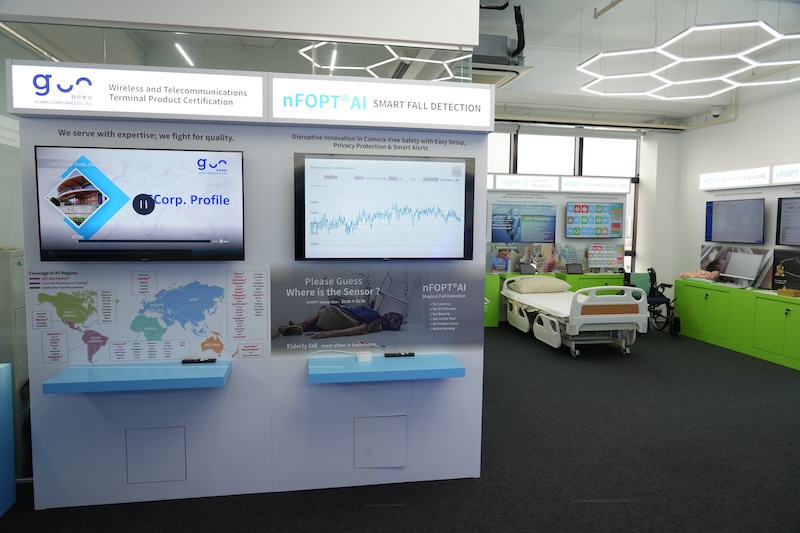
The nFOPT® AI Smart Health Innovation Center in Singapore
The nFOPT® AI Smart Health Innovation Center at TDBC’s Howard Road office in Singapore provides a hands-on environment where healthcare providers, partners and researchers can experience nFOPT® technology in action. Visitors can explore applications across sleep, elderly care, remote monitoring and other areas of smart health, alongside complementary technologies from selected innovation partners. Part of a growing network of Innovation Centers established with Huijia Health (滙嘉健康) in Taiwan, Arizona and Singapore, the Center brings together sensing, digital biomarkers, AI and connected technologies to demonstrate how the future of intelligent, proactive care is taking shape today.
Come and experience nFOPT® for yourself. Contact TDBC to arrange a visit to our Singapore Innovation Center.